
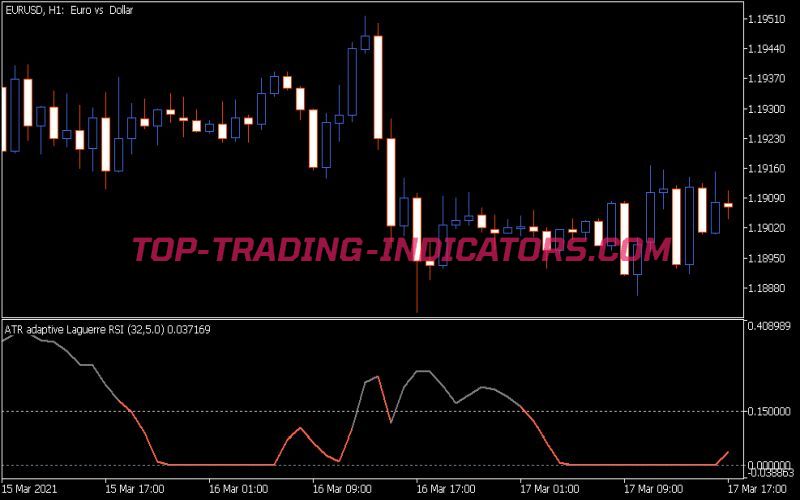
The quest for reliable trading signals is a constant pursuit for both novice and experienced market participants. Combining various technical analysis tools can often lead to more robust and filtered signals, enhancing the probability of successful trades. A powerful combination involves the Relative Strength Index (RSI) and Bollinger Bands (BB), particularly when identifying Bollinger Band "squeezes," which often precede significant price movements.
Understanding the Tools
Before delving into the specifics of how these tools interact, a review of each indicator is essential.
Quick Refresher: What is RSI?
The Relative Strength Index (RSI) is a momentum oscillator that measures the speed and magnitude of recent price changes to evaluate overbought or oversold conditions in the price of an asset. It is primarily used to identify potential trend reversals. RSI values range from 0 to 100. Traditionally, an RSI above 70 suggests the asset is overbought and may be due for a pullback, while an RSI below 30 suggests the asset is oversold and may be due for a bounce. However, these levels can be adjusted based on market conditions and the specific asset being traded. Beyond identifying overbought and oversold conditions, RSI can also be used to spot divergences between price action and the indicator itself. For example, if the price makes a new high but the RSI fails to make a new high, it could signal bearish divergence, suggesting a potential trend reversal to the downside.
How Bollinger Bands Work and What a “Squeeze” Means
Bollinger Bands are volatility bands placed above and below a simple moving average (SMA). A typical setup uses a 20-period SMA with bands set at two standard deviations above and below the SMA. The bands expand and contract as volatility increases and decreases. The "squeeze" occurs when the Bollinger Bands narrow, indicating a period of low volatility. This contraction suggests that a period of high volatility is likely to follow, although it does not indicate the direction of the breakout.
Why Volatility Contraction Precedes Expansion
Markets tend to oscillate between periods of consolidation and periods of trend. When the market is consolidating, volatility typically contracts as price action becomes contained within a narrower range. This period of low volatility cannot last forever. Eventually, some catalyst – be it fundamental news, technical factors, or simply the buildup of pressure – will trigger a breakout. The energy stored during the period of low volatility is then released, leading to a significant price movement. This is why traders often watch for Bollinger Band squeezes as potential precursors to significant price trends. The tighter the squeeze, the greater the potential for a substantial move.
Identifying the Setup
Identifying the combined setup requires a systematic approach, looking for specific conditions that suggest a high-probability trading opportunity.
Conditions for a Valid Squeeze
A valid squeeze is characterized by the Bollinger Bands contracting to their narrowest point in a defined period. This can be visually assessed by observing the bands drawing closer together on a price chart. Some traders use specific metrics to quantify the squeeze, such as calculating the Bollinger Bandwidth (the difference between the upper and lower bands divided by the middle band). A significant decrease in bandwidth indicates a potential squeeze. It's crucial to establish a historical baseline to determine what constitutes a "narrow" band for a particular asset and timeframe.
RSI in Neutral → Overbought/Oversold Transition
While the squeeze indicates the potential for a breakout, the RSI helps to gauge the momentum and potential direction of that breakout. Ideally, the RSI should transition from a neutral level (around 50) towards overbought or oversold levels during the squeeze formation. This suggests that the momentum is building in a particular direction, increasing the likelihood of a breakout in that direction. For example, if the RSI is trending upwards from 50 towards 70 during the squeeze, it suggests a potential bullish breakout. Conversely, if the RSI is trending downwards from 50 towards 30, it suggests a potential bearish breakout.
Chart Example of Squeeze + RSI Confirmation
Consider a hypothetical example on a daily chart. The price of a stock has been trading in a narrow range for several weeks, causing the Bollinger Bands to contract significantly. Simultaneously, the RSI has been hovering around 50, indicating neutral momentum. Suddenly, positive news emerges regarding the company, causing the price to start climbing. The RSI begins to rise above 50, confirming the increasing bullish momentum. As the price breaks above the upper Bollinger Band, the RSI approaches or enters overbought territory (above 70), providing further confirmation of the bullish breakout. This combined signal – squeeze followed by an RSI transition and breakout above the upper band – presents a potentially high-probability long entry.
Entry & Exit Rules
Once the setup is identified, establishing clear entry and exit rules is crucial for managing risk and maximizing potential profits.
Entry When Price Breaks Upper/Lower Bollinger Band with RSI Confirmation
The primary entry signal is a price breakout above the upper Bollinger Band (for a long position) or below the lower Bollinger Band (for a short position), coinciding with RSI confirmation. The RSI confirmation involves observing the RSI either entering overbought/oversold territory or showing a strong trend in that direction. Some traders prefer to wait for a candle to close outside the Bollinger Band before entering, while others may enter on the break itself. The specific entry technique can be tailored based on individual risk tolerance and trading style. However, it's important to remain consistent with the chosen method.
Setting Stop-Loss Below Squeeze Base
The stop-loss order should be placed below the base of the squeeze (for a long position) or above the base of the squeeze (for a short position). The base of the squeeze refers to the area where the price was consolidating before the breakout. This placement helps to protect against false breakouts and ensures that the trade is invalidated if the price reverses back into the consolidation range. The exact placement of the stop-loss can be adjusted based on the volatility of the asset and the trader's risk tolerance. A more conservative approach involves placing the stop-loss slightly further away from the squeeze base to allow for minor price fluctuations.
Profit Targets Based on ATR or Recent Swing Highs/Lows
Profit targets can be determined using various methods. One common approach is to use the Average True Range (ATR) to project a potential price target. For example, the target could be set at 1x, 1.5x, or 2x the ATR distance from the entry point. Another approach is to identify recent swing highs (for a long position) or swing lows (for a short position) and use those levels as potential profit targets. These levels often act as areas of resistance or support, and the price is likely to encounter some difficulty breaking through them. The choice of profit target method should be based on the trader's risk-reward preferences and the specific characteristics of the asset being traded. It's also important to consider the overall market context and potential fundamental factors that could influence the price.
Risk Management Tips
Effective risk management is paramount to protect capital and ensure long-term profitability.
Filtering Signals with Volume or Candlestick Confirmation
To further refine the signals, consider incorporating volume and candlestick pattern analysis. A breakout accompanied by a surge in volume provides stronger confirmation of the move. High volume suggests that there is significant buying or selling pressure behind the breakout, increasing the likelihood that it will sustain. Candlestick patterns can also provide valuable insights. For example, a bullish engulfing pattern or a piercing line pattern near the upper Bollinger Band can further confirm a bullish breakout. Conversely, a bearish engulfing pattern or a dark cloud cover pattern near the lower Bollinger Band can further confirm a bearish breakout. Filtering signals with volume and candlestick confirmation can help to reduce the number of false positives and improve the overall accuracy of the strategy.
Backtesting the Strategy Over Multiple Timeframes
Before implementing this strategy with real capital, it's essential to backtest it on historical data across multiple timeframes. Backtesting allows one to assess the strategy's performance under various market conditions and identify any potential weaknesses. It also helps to optimize the parameters of the strategy, such as the RSI levels and Bollinger Band settings, for specific assets and timeframes. A comprehensive backtesting process should involve analyzing a large dataset of historical prices and simulating trades based on the defined entry, exit, and risk management rules. The results of the backtesting can then be used to refine the strategy and develop a more robust trading plan.
Avoiding False Breakouts During News Events
News events can often trigger sudden and unpredictable price movements, leading to false breakouts. It's prudent to avoid trading during periods of high-impact news releases. Economic data releases, central bank announcements, and geopolitical events can all cause significant volatility in the market. Traders should be aware of the economic calendar and avoid entering new positions shortly before or after major news releases. If already in a position, consider tightening stop-loss orders or reducing position size to mitigate the risk of adverse price movements. Patience is crucial during these periods, and it's often best to wait for the market to settle down before resuming trading activity.
Conclusion
The combined power of the Relative Strength Index (RSI) and Bollinger Band squeeze offers a potent approach to identifying potential trading opportunities. The Bollinger Band squeeze identifies periods of low volatility that often precede significant price movements, while the RSI helps to gauge the momentum and potential direction of the breakout. By combining these two indicators, traders can filter out false signals and improve the accuracy of their trading decisions.
This strategy is most effective during periods of market consolidation, when the price is trading within a narrow range. During these periods, the Bollinger Bands are likely to contract, creating a squeeze. The RSI can then be used to identify potential breakouts in either direction. It's important to note that no strategy is foolproof, and there is always a risk of losses. However, by following the established entry, exit, and risk management rules, traders can increase their chances of success.
Before implementing this strategy with real capital, it is strongly encouraged to test it thoroughly using a demo account. This allows one to familiarize oneself with the mechanics of the strategy and assess its performance under various market conditions without risking actual money. Experiment with different parameters and settings to optimize the strategy for individual trading style and risk tolerance. Practice and patience are essential for mastering this, and any other, trading strategy.
🤖 AI-Powered Trading Indicators
Win Up To 93% of Trades With the #1 Most Profitable Indicators
Unlock the power of artificial intelligence and take your trading to the next level. Our VIP Trading Indicators are designed to help you dominate any market — Forex, Crypto, Stocks — with up to 93% accuracy.
Gain instant 24/7 access to 5+ powerful, battle-tested indicators built to predict market trends with precision. Whether you're a beginner or an expert, these tools are optimized for all skill levels and work on any device.
✓ 30-Day Money Back Guarantee — Try Risk-Free!