
In the realm of market analysis, strategies based on indicators provide a framework for identifying potential trading opportunities. The Directional Movement Index (DMI) and its related components offer a unique perspective on trend strength and direction. A DMI Directional Strength Scanner can be a valuable tool for traders seeking to pinpoint significant trends across various financial instruments.
Understanding the Tools of Directional Movement
The DMI, developed by J. Welles Wilder Jr., is not a single line but a system consisting of several components: the Average Directional Index (ADX), the Positive Directional Indicator (+DI), and the Negative Directional Indicator (-DI). Understanding each of these is crucial for interpreting the signals generated by a DMI Directional Strength Scanner.
A Quick Refresher: What is the DMI?
At its core, the DMI aims to quantify the strength of a trend. It does this by comparing the current high and low prices to the previous period's high and low prices, determining the Directional Movement (+DM and -DM). These Directional Movements are then smoothed and normalized, leading to the +DI and -DI values. The ADX, in turn, is derived from the +DI and -DI, representing the overall strength of the trend regardless of direction.
- +DI (Positive Directional Indicator): Measures the strength of the uptrend. Higher values indicate a stronger upward movement.
- -DI (Negative Directional Indicator): Measures the strength of the downtrend. Higher values indicate a stronger downward movement.
- ADX (Average Directional Index): Measures the strength of the overall trend. Values above 25 typically suggest a strong trend, while values below 20 indicate a weak or non-existent trend.
The relationship between these lines is vital. When +DI is above -DI, it suggests an uptrend is in place. Conversely, when -DI is above +DI, it suggests a downtrend. The ADX then confirms the strength of whichever trend is dominant.
How a DMI Directional Strength Scanner Works
A DMI Directional Strength Scanner is designed to automate the process of analyzing multiple assets for specific DMI conditions. Instead of manually checking each chart, the scanner filters through a watchlist of securities, identifying those that meet predefined criteria related to trend strength and direction. These criteria might include:
- ADX above a certain threshold (e.g., 25 or 30) indicating a strong trend.
- +DI crossing above -DI, signaling a potential bullish trend initiation.
- -DI crossing above +DI, signaling a potential bearish trend initiation.
- Specific levels of +DI and -DI, suggesting overbought or oversold conditions within the context of the trend.
The scanner essentially flags assets where the DMI suggests a significant trend is underway, allowing traders to focus their attention on potentially profitable opportunities. Sophisticated scanners may also incorporate additional filters, such as volume or price action criteria, to further refine the signals.
Why Trend Strength Matters
Identifying trends is a cornerstone of many successful trading strategies. Trading with the trend generally increases the probability of success, as it aligns with the prevailing market momentum. However, not all trends are created equal. A weak trend might be easily reversed, leading to false signals and losses. The ADX component of the DMI helps filter out these weak trends, focusing on situations where the trend is strong enough to be potentially sustainable.
A DMI Directional Strength Scanner can therefore be particularly useful in the following scenarios:
- Trend Following: Identifying assets that are already in a strong uptrend or downtrend, providing opportunities to join the existing momentum.
- Breakout Trading: Confirming the strength of a breakout from a consolidation pattern, using the ADX to ensure the breakout has sufficient momentum to continue.
- Reversal Trading: Identifying potential trend reversals when the ADX reaches extremely low levels, suggesting the current trend is weakening and a change in direction may be imminent.
Identifying Potential Trading Setups
While a DMI Directional Strength Scanner automates the initial screening process, further analysis is required to validate the signals and formulate a trading plan. This involves considering the broader market context, analyzing price action, and identifying potential support and resistance levels.
Conditions for a Valid Signal
A signal from a DMI scanner should not be taken in isolation. Several factors should be considered to increase the probability of a successful trade:
- ADX Strength: The higher the ADX value, the stronger the trend. A general rule of thumb is to look for ADX values above 25, but this can be adjusted based on the specific asset and timeframe.
- +DI and -DI Crossovers: A bullish crossover occurs when +DI crosses above -DI, while a bearish crossover occurs when -DI crosses above +DI. These crossovers can be early signals of a potential trend change, but should be confirmed by the ADX.
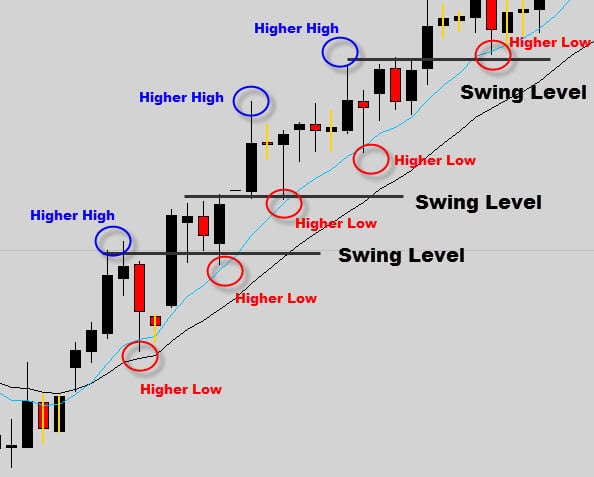
- Price Action Confirmation: Look for price action that confirms the DMI signal. For example, in a bullish setup, look for a break above a resistance level or a series of higher highs and higher lows. In a bearish setup, look for a break below a support level or a series of lower highs and lower lows.
- Volume Confirmation: Increasing volume during a trend confirmation can further validate the signal. Strong volume suggests increased participation and conviction in the trend.
Chart Example of DMI Signals
Imagine a scenario where a DMI Directional Strength Scanner identifies a stock with the following characteristics:
- ADX is currently at 35, indicating a strong trend.
- +DI has recently crossed above -DI, signaling a potential bullish trend initiation.
- The stock price has broken above a previous resistance level on increasing volume.
In this case, the DMI signal is supported by price action and volume confirmation, suggesting a higher probability of a successful long trade. Conversely, if the stock price fails to break above the resistance level or volume is weak, the DMI signal may be a false positive.
Entry & Exit Rules for DMI-Based Trades
Once a valid signal has been identified, it's important to establish clear entry and exit rules to manage risk and maximize potential profits. These rules should be based on the DMI, price action, and overall market context.
Entry Points
The entry point should be carefully chosen to minimize risk and maximize potential reward. Common entry strategies include:
- Breakout Entry: Enter a long position when the price breaks above a resistance level after a bullish DMI signal, or enter a short position when the price breaks below a support level after a bearish DMI signal.
- Pullback Entry: Wait for the price to pullback to a support level (in a bullish trend) or a resistance level (in a bearish trend) after a DMI signal, and enter a position when the price bounces off that level.
- DMI Crossover Entry: Enter a long position when +DI crosses above -DI and the ADX is above a certain threshold, or enter a short position when -DI crosses above +DI and the ADX is above a certain threshold.
Setting Stop-Loss Orders
A stop-loss order is essential for limiting potential losses. Common stop-loss placement strategies include:
- Below Support/Above Resistance: Place the stop-loss order below a recent support level (in a long position) or above a recent resistance level (in a short position).
- ATR-Based Stop-Loss: Use the Average True Range (ATR) to determine the appropriate stop-loss distance. For example, place the stop-loss order 2-3 times the ATR below the entry price (in a long position) or above the entry price (in a short position).
Profit Targets
Determining profit targets is crucial for locking in gains and maximizing potential returns. Common profit-taking strategies include:
- Fixed Reward-to-Risk Ratio: Set a profit target that is a multiple of the risk (the distance between the entry price and the stop-loss order). For example, aim for a 2:1 or 3:1 reward-to-risk ratio.
- Technical Levels: Identify potential resistance levels (in a long position) or support levels (in a short position) and set the profit target near those levels.
- Trailing Stop-Loss: Use a trailing stop-loss order to lock in profits as the price moves in the desired direction. The trailing stop-loss order will automatically adjust as the price increases (in a long position) or decreases (in a short position), allowing you to capture more profit if the trend continues.
Risk Management Tips for DMI Trading
Effective risk control is essential for preserving capital and achieving long-term success in trading. There are several steps that can be taken to manage risk when using a DMI Directional Strength Scanner.
Filtering Signals
Not all signals generated by the scanner are created equal. It is important to filter these signals using other tools and techniques:
- Volume Confirmation: As mentioned earlier, volume can be used to confirm the strength of a trend. Low volume breakouts or continuations should be treated with suspicion.
- Candlestick Patterns: Certain candlestick patterns can provide clues about the potential direction of the market. For example, a bullish engulfing pattern at a support level can confirm a bullish DMI signal.
- Broader Market Con Consider the overall market conditions. Is the market in a bullish or bearish trend? Are there any major news events that could impact the asset you are trading?
Backtesting the Strategy
Backtesting involves testing the DMI strategy on historical data to assess its performance. This can help you identify potential weaknesses in the strategy and optimize the parameters. Backtesting should be performed over multiple timeframes and market conditions to ensure the strategy is robust.
Avoiding News Events
News events can cause sudden and unpredictable price movements, which can invalidate DMI signals and trigger stop-loss orders. It is generally advisable to avoid trading during major news events, or to reduce your position size significantly.
Conclusion: Leveraging DMI for Trend Identification
A DMI Directional Strength Scanner can be a powerful tool for identifying potential trading opportunities based on trend strength and direction. By automating the screening process, it allows traders to focus their attention on the most promising setups. However, it is important to remember that the DMI is just one piece of the puzzle. Effective trading requires a comprehensive approach that includes price action analysis, volume confirmation, risk management, and a thorough understanding of market dynamics. When this trading indicator is most effective is during periods of sustained trends. Markets consolidating may result in noise.
It is strongly recommended to test any DMI strategy on a demo account before risking real capital. This will allow you to familiarize yourself with the indicator, refine your trading rules, and assess the strategy's performance in a risk-free environment.
🤖 AI-Powered Trading Indicators
Win Up To 93% of Trades With the #1 Most Profitable Indicators
Unlock the power of artificial intelligence and take your trading to the next level. Our VIP Trading Indicators are designed to help you dominate any market — Forex, Crypto, Stocks — with up to 93% accuracy.
Gain instant 24/7 access to 5+ powerful, battle-tested indicators built to predict market trends with precision. Whether you're a beginner or an expert, these tools are optimized for all skill levels and work on any device.
✓ 30-Day Money Back Guarantee — Try Risk-Free!