
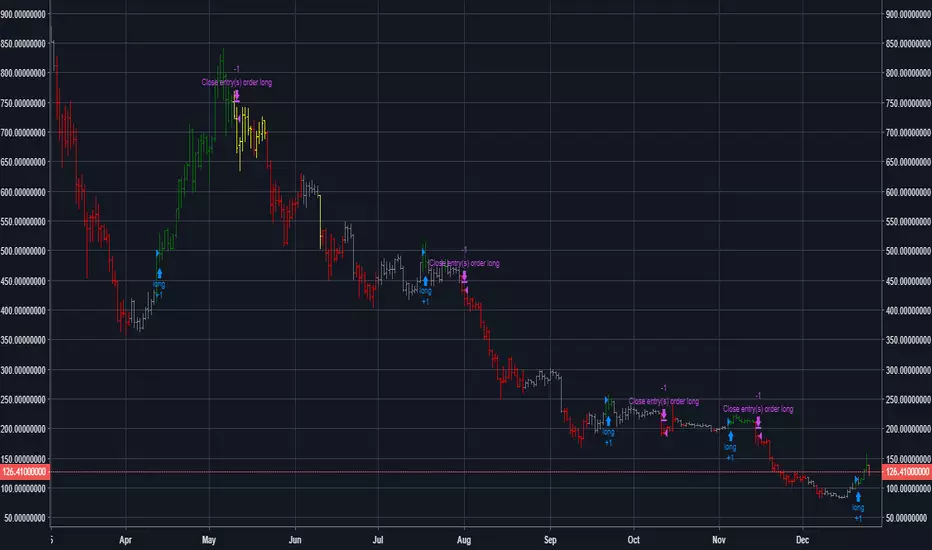
Successful navigation of financial markets requires a combination of skill, knowledge, and the application of reliable tools. Indicator-based strategies offer a structured approach to identifying potential trading opportunities. Among the numerous technical analysis tools available, the Relative Strength Index (RSI) and Moving Average Convergence Divergence (MACD) are two of the most popular. Combining these indicators can create a synergistic strategy that potentially enhances signal accuracy and improves overall trading performance.
Understanding the Stochastic RSI and MACD
The Stochastic RSI and MACD are both momentum indicators, but they provide different perspectives on price movement. RSI measures the speed and change of price movements, identifying overbought and oversold conditions. MACD, on the other hand, tracks the relationship between two moving averages, highlighting changes in momentum and potential trend reversals. Using them in combination can lead to a more robust trading strategy.
Quick Refresher: What is the Stochastic RSI?
The Stochastic RSI (Stoch RSI) is an indicator used in technical analysis that evaluates whether an asset is overbought or oversold, and identifies possible trend changes. It is, in essence, an indicator of an indicator. Developed by Tushar Chande and Stanley Kroll, the Stoch RSI applies the formula for a stochastic oscillator to the RSI values rather than to standard price data. This results in a more sensitive oscillator that fluctuates between 0 and 1 (or 0 and 100, depending on the scaling). Readings above 0.8 (or 80) suggest the RSI is overbought, while readings below
0.2 (or 20) suggest it is oversold.
Unlike the standard RSI, which can remain in overbought or oversold territory for extended periods, the Stoch RSI tends to oscillate more rapidly. This makes it potentially useful for identifying short-term trading opportunities. Traders often use the Stoch RSI to confirm signals generated by other indicators or to identify potential entry and exit points.
How MACD Works and What It Signals
Moving Average Convergence Divergence (MACD) is a trend-following momentum indicator that illustrates the relationship between two moving averages of a security’s price. The MACD is calculated by subtracting the 26-period Exponential Moving Average (EMA) from the 12-period EMA. This calculation forms the MACD line. A 9-period EMA of the MACD line, called the signal line, is then plotted on top of the MACD line, acting as a trigger for buy and sell signals.
Here's a breakdown of MACD components:
- MACD Line: Represents the difference between the 12-period EMA and the 26-period EMA.
- Signal Line: A 9-period EMA of the MACD line.
- Histogram: Visually represents the difference between the MACD line and the signal line. It helps identify the strength of the momentum.
MACD signals can be interpreted in several ways:
- Crossovers: A bullish signal occurs when the MACD line crosses above the signal line. Conversely, a bearish signal occurs when the MACD line crosses below the signal line.
- Divergence: Bullish divergence occurs when the price makes lower lows, but the MACD makes higher lows, indicating weakening downward momentum. Bearish divergence occurs when the price makes higher highs, but the MACD makes lower highs, indicating weakening upward momentum.
- Histogram Analysis: The histogram can provide early signals. Increasing histogram values suggest strengthening momentum in the direction of the trend, while decreasing values suggest weakening momentum.
Why Combining the Stochastic RSI and MACD is Effective
The strength of combining the Stochastic RSI and MACD lies in their complementary nature. Stoch RSI, with its sensitivity, can identify potential entry points in overbought or oversold conditions. MACD, on the other hand, provides a broader view of the trend and momentum. By using them together, traders can filter out false signals and increase the probability of successful trades.
For example, a trader might look for the Stoch RSI to enter oversold territory while the MACD is showing bullish divergence. This combination suggests that the price is likely to reverse upward. Conversely, a Stoch RSI entering overbought territory while the MACD shows bearish divergence could signal a potential downward reversal.
Identifying Trading Setups
Identifying effective trading setups requires a systematic approach. When combining the Stochastic RSI and MACD, specific conditions must be met to validate a potential trade.
Conditions for a Valid Setup
For a bullish setup, the following conditions may be considered:
- Stochastic RSI Oversold: The Stoch RSI should be below a predefined level, typically 20, indicating an oversold condition.
- MACD Bullish Crossover: The MACD line should cross above the signal line, indicating a potential upward trend.
- MACD Bullish Divergence: The price should be making lower lows, while the MACD is making higher lows, suggesting weakening downward momentum.
For a bearish setup, the conditions are reversed:
- Stochastic RSI Overbought: The Stoch RSI should be above a predefined level, typically 80, indicating an overbought condition.
- MACD Bearish Crossover: The MACD line should cross below the signal line, indicating a potential downward trend.
- MACD Bearish Divergence: The price should be making higher highs, while the MACD is making lower highs, suggesting weakening upward momentum.
Chart Examples
Consider a hypothetical chart of a stock. The Stoch RSI falls below 20, signaling an oversold condition. Simultaneously, the MACD line crosses above the signal line, and the price forms a lower low while the MACD forms a higher low (bullish divergence). This combination of factors suggests a strong buy signal. Conversely, imagine the Stoch RSI climbs above 80, indicating an overbought condition. The MACD line then crosses below the signal line, and the price makes a higher high while the MACD makes a lower high (bearish divergence). This scenario indicates a strong sell signal.
Entry & Exit Rules
Once a valid setup is identified, clear entry and exit rules are essential for effective trading.
Entry Points
For a bullish setup, a possible entry point is when the price breaks above a recent high or a key resistance level, confirming the upward momentum. For a bearish setup, a possible entry point is when the price breaks below a recent low or a key support level, confirming the downward momentum.
Setting Stop-Loss Orders
Stop-loss orders are crucial for managing risk. For a long position (bullish setup), the stop-loss can be placed below a recent low or a key support level. For a short position (bearish setup), the stop-loss can be placed above a recent high or a key resistance level.
Profit Targets
Profit targets can be determined using various methods, such as:
- Fixed Ratio: Setting a target that is a multiple of the risk (e.g., a 2:1 or 3:1 risk-reward ratio).
- Technical Levels: Identifying potential resistance levels for long positions or support levels for short positions.
- Average True Range (ATR): Using the ATR to project potential price movement based on historical volatility.
Risk Management Tips
Effective risk management is paramount for long-term trading success. Several techniques can be employed to mitigate risk when using the Stochastic RSI and MACD strategy.
Filtering Signals with Volume and Candlestick Confirmation
Volume can provide additional confirmation of a signal. For a bullish setup, increasing volume during the price breakout can validate the upward momentum. Conversely, for a bearish setup, increasing volume during the price breakdown can validate the downward momentum. Candlestick patterns, such as bullish engulfing or bearish engulfing patterns, can further confirm the signals.
Backtesting the Strategy
Before implementing any trading strategy with real capital, it is crucial to backtest it on historical data. Backtesting helps assess the strategy’s performance across different market conditions and timeframes. This process involves applying the strategy’s rules to historical data and evaluating its profitability and drawdown.
Avoiding False Signals During News Events
Major news events can cause significant price volatility, leading to false signals. It is often prudent to avoid trading during these periods or to reduce position sizes to mitigate the risk of adverse price movements.
Conclusion
The combined power of the Stochastic RSI and MACD can provide a robust framework for identifying potential trading opportunities. By understanding the individual strengths of each indicator and applying them in conjunction, traders can enhance their signal accuracy and improve their overall trading performance. This strategy is particularly effective during periods of market consolidation or when identifying potential trend reversals.
It's important to remember that no trading strategy guarantees profits, and all strategies involve risk. Thorough testing and disciplined risk management are essential for success. Prior to employing this strategy with real money, practice and get comfortable with the indicators using a demo account.
Good luck in your trading endeavors!
🤖 AI-Powered Trading Indicators
Win Up To 93% of Trades With the #1 Most Profitable Indicators
Unlock the power of artificial intelligence and take your trading to the next level. Our VIP Trading Indicators are designed to help you dominate any market — Forex, Crypto, Stocks — with up to 93% accuracy.
Gain instant 24/7 access to 5+ powerful, battle-tested indicators built to predict market trends with precision. Whether you're a beginner or an expert, these tools are optimized for all skill levels and work on any device.
✓ 30-Day Money Back Guarantee — Try Risk-Free!